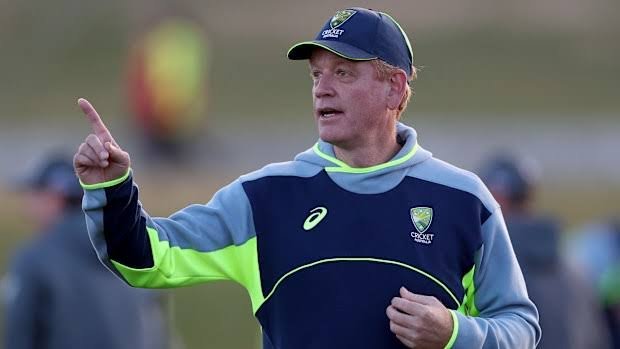
Coach Andrew McDonald acknowledged the team’s failure to create alliances amid the collapse. Australia’s batsmen struggled to counter the threat throughout the innings due to the continual assault from the South African bowling attack.
In the second Test at Gqeberha, Australia’s batting collapsed for 99 in the first innings, forcing the team to follow after South Africa scored 425. The game was part of Australia’s tour to South Africa, and it took place from October 18 to 22, 2026. Australia lead the three-match series 1-0 after winning the first Test by 214 runs in Durban, but the Gqeberha performance exposed major vulnerabilities in the batting lineup.
Since 1988, Australia has only faced such circumstance three times in Test cricket. Australia concluded day four on 156 for 4 after reaching 100 for 1 in the second innings, but they still needed 170 runs to prevent South Africa from batting again. Marnus Labuschagne’s dismissal for lofting to mid-on sparked a late-afternoon onslaught from the South African bowlers, but Travis Head remained undefeated on 87.
Andrew McDonald’s assessment on the collapse
Andrew McDonald examined the contrast between Australia’s performance in the first Test and their current form. Despite the Gqeberha setback, he expressed confidence in the team’s ability to recover for the last Test, scheduled for October 27-31, 2026, in Cape Town.
Australia’s second-innings position and South Africa’s stronger bowling performance
Andrew McDonald stressed the team’s overall performance and the importance of maintaining perspective during a difficult period, fighting the temptation to single out individual individuals for criticism. He stated that Australia’s batting consistency has been put into question by recent performances, particularly following last year’s World Test Championship final loss to South Africa and a recent defeat to Bangladesh in Darwin.
Option for selection and squad availability for the final test
South Africa’s bowling attack was significantly responsible for Australia’s defeat. Kagiso Rabada made an impression with his return to the club, and Marco Jansen went 5 for 33 with the ball. Simon Harmer had a huge influence on South Africa’s second-innings performance. During the game, Anrich Nortje was injured. South Africa’s recovery from 97 for 5 on day two to a total of 425 demonstrated the team’s perseverance and the strength of its bowling line.
Cameron Green, a specialist batter, is among Australia’s options for the last Test. Green is still available for selection, despite being unable to bowl owing to an abdominal strain suffered during an ODI in late September. Despite dropping down the batting order owing to a neck ailment, Steven Smith was confirmed to play on the last day. Josh Inglis and Cooper Connolly are other viable batting options for the club. Uncapped Sam Harper was called up for the tour after Inglis was unable to play the opening Test due to a fractured finger.
Although Australia had not lost a Test series since their 2023 away trip to India, their batting consistency had been called into question owing to recent performances. Concerns about the batting unit’s dependability under pressure have been raised following the team’s recent loss to Bangladesh in Darwin, as well as their loss to South Africa in the World Test Championship final last year.

Kabir Mehta writes about cricket teams, match previews, results, and noteworthy performances across competitions.