
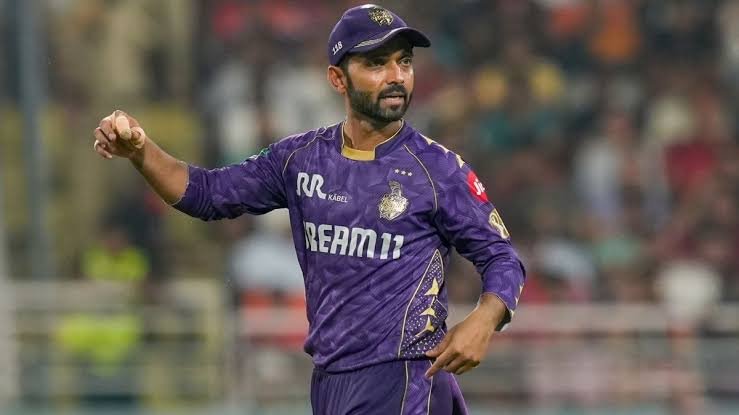
Former Indian cricketer Ajinkya Rahane, who managed the Kolkata Knight Riders in the 2026 Indian Premier League, has joined efforts to scrap the Impact Player rule. Many cricket players have challenged the law that allows teams to alter players after the toss, citing concerns about player development and match dynamics.
Citing the rule’s negative impact on the development of all-rounders in Indian cricket, Ajinkya Rahane believes it should be completely removed from the league structure. His viewpoint is consistent with broader concerns about the lack of fast-bowling all-rounders in India’s cricket pipeline, which has become more apparent in recent years.
Why Ajinkya Rahane believes the regulation should be repealed.
The former KKR captain recalls conversations between IPL captains about the rule’s future. He added that, ahead to a captains’ meeting last year, the majority of captains expressed opposition to the Impact Player regulation. Ajinkya Rahane stated that it is unknown whether the IPL will lift the ban this year or during the next major auction because the current standards continue its implementation until 2027.
impact on Indian cricket players’ development as all-rounders.
The rule’s impact on the development of all-rounders in Indian cricket is Ajinkya Rahane’s primary concern. He emphasised how vital all-rounders are to the national team’s structure and how the Impact Player rule reduces their importance in the league. Rahane provided specific examples from the previous season in which teams in difficult situations—such as 90 for 7 or 100 for 7—were able to score 200 runs by adding a hitter to the innings under the Impact Player rule.
Also Read : Gautam Gambhir Calls Roston Chase’s Spell Game-Changing After India Defeat
Ajinkya Rahane advocated for a change in the league’s strategy that would ensure all-rounders play more prominent roles in games while giving bowlers a greater advantage. His viewpoint is consistent with broader concerns about the lack of fast-bowling all-rounders in India’s cricket pipeline, which has become more apparent in recent years.